Threatened species: Persius duskywing
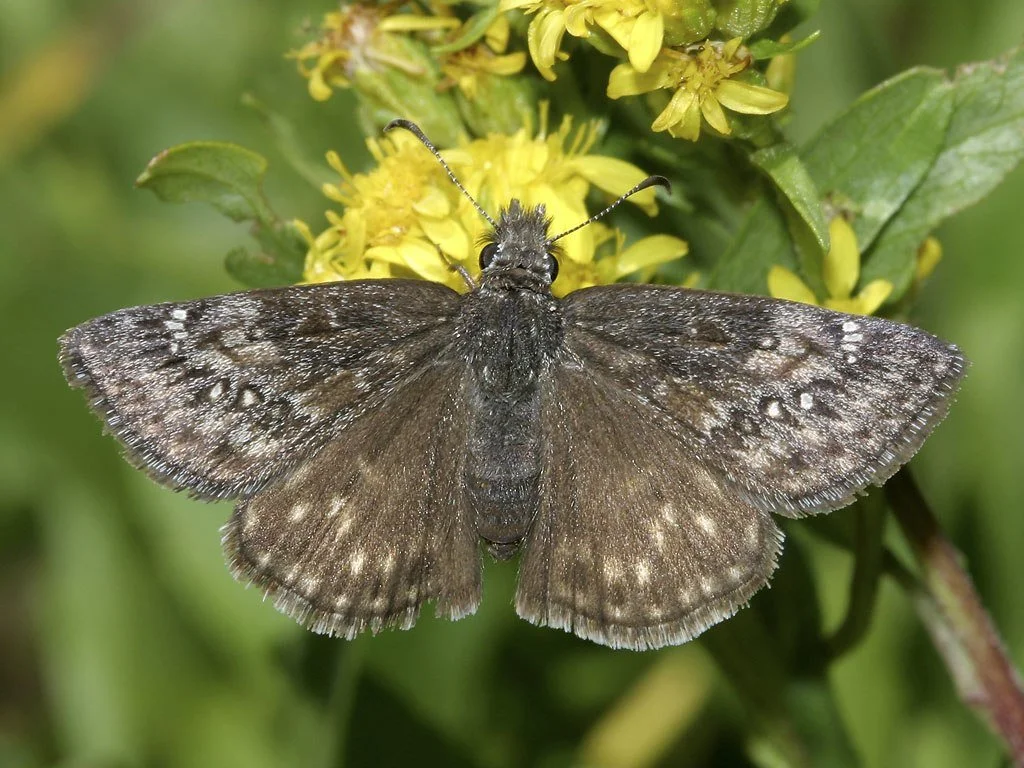
The Persius duskywing (Erynnis persius) is a small skipper butterfly with dark brown upper wings, faint clear spots, and grayish patches; males have raised white hairs on the forewings and creamy fringes on the hindwings. Caterpillars are light green with fine hairs and a darker head. Adults are nectar feeders and fly in a single short season each year.
Where do they live (specifically in Michigan)?
In Michigan the eastern subspecies Erynnis persius occurs in scattered oak-pine barrens, dry sand prairies, oak openings, and adjacent brushy fields in the western and southern Lower Peninsula (e.g., Newaygo, Montcalm, Muskegon counties), where wild blue lupine grows.
What do they pollinate?
Adults sip nectar from flowers and can transfer pollen as they forage, but skipper butterflies like Persius duskywing are typically inefficient pollinators compared with bees and are not known to pollinate agricultural crops directly. They may visit wildflowers like lupine, blueberries, wild crab, phlox, and other prairie blooms, contributing modestly to wild plant pollination rather than crop pollination.
How do their numbers look nationally and in Michigan?
Nationwide the species is secure in the west, but the eastern subspecies is rare and in severe decline. In Michigan it’s legally listed as threatened, with scattered recent records mostly in a few counties; historical sites in other areas are now unconfirmed. Across the eastern range, populations have dwindled and the butterfly is extirpated in parts of Ontario and other states.
How did they become a threatened species?
Persius duskywing populations declined primarily because habitat loss and alteration have reduced open sandy prairies and oak barrens that support their host plants, especially wild blue lupine. Fire suppression has allowed woody vegetation to overgrow lupine habitat, fragmentation and development have reduced suitable sites, and pesticide spraying may have harmed local populations.
What can we plant to encourage their numbers?
To support Persius duskywing, plant native larval host plants such as wild blue lupine (Lupinus perennis) and other native legumes like golden banner and Lotus species, and include a variety of native nectar-producing wildflowers (e.g., wild phlox, blueberries, wild plum) in sunny, open sites.