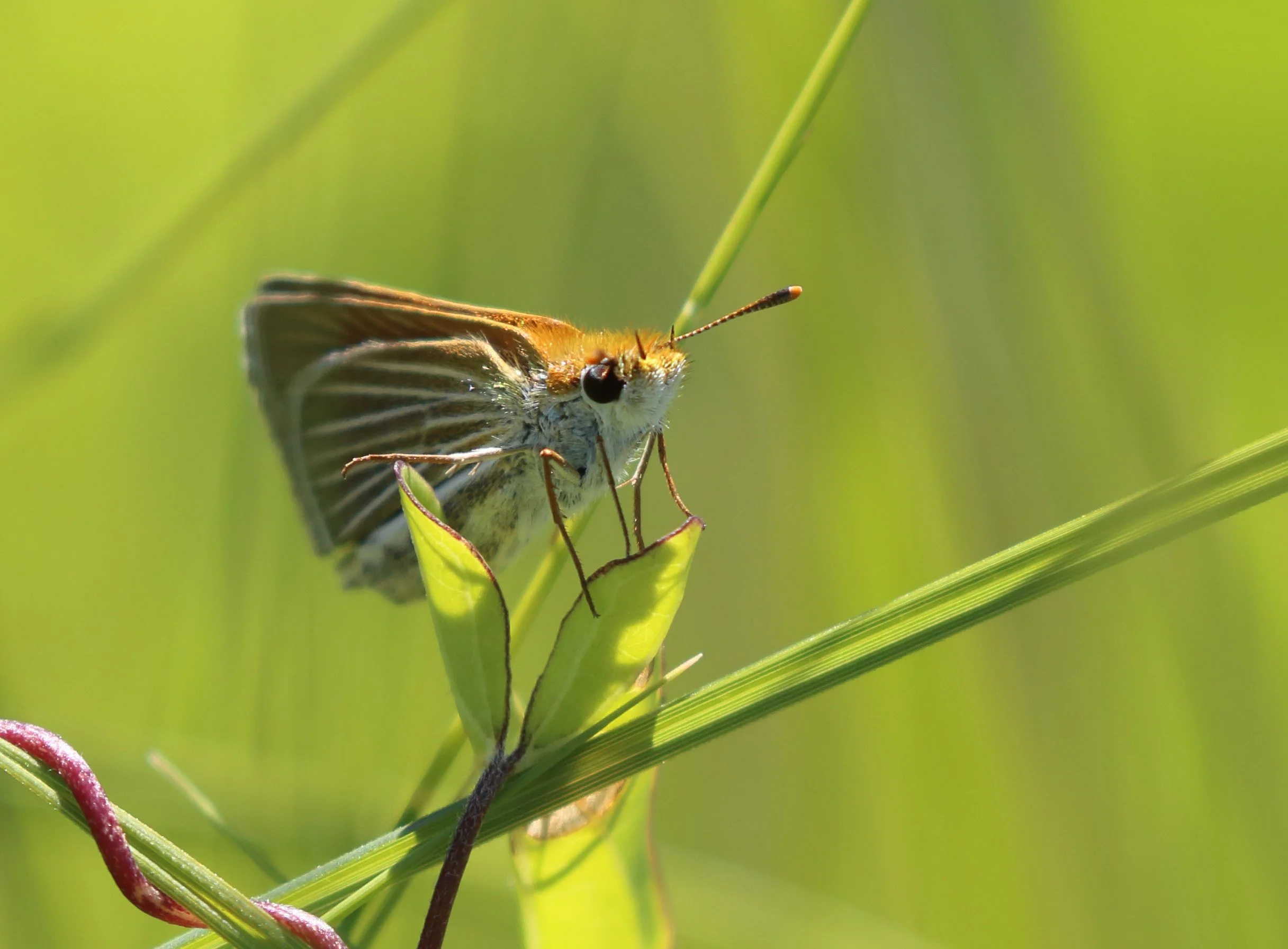
Endangered species: Poweshiek skipperling
The Poweshiek skipperling (Oarisma poweshiek) is a tiny prairie butterfly with dark brown upper wings edged in orange and pale brown undersides with whitish veins; the caterpillar is pale green with a darker green band and cream stripes. Adults are univoltine, emerging in mid-June to early July and living only a few weeks to feed, mate and lay eggs.
Where do they live (specifically in Michigan)?
In Michigan Poweshiek skipperlings persist only in isolated high-quality prairie remnants like prairie fens and sedgy meadows in a few counties including Oakland, Jackson, Livingston, Washtenaw, Lenawee and historically Kent, where tallgrass prairie plants and sedges remain; these habitats are rare and fragmented.
What do they pollinate?
Poweshiek skipperlings forage for nectar on a variety of native wildflowers rather than crops; they visit prairie blooms such as purple coneflower, black-eyed Susan, stiff tickseed and ox-eye.
How do their numbers look nationally and in Michigan?
Once common across tallgrass prairies of the upper Midwest and eastern plains, Poweshiek skipperling populations crashed between 2005–2015; they are now critically imperiled and federally listed as endangered, with only a few isolated populations in Michigan, Wisconsin and Manitoba, and extirpated from much of their former U.S. range.
How did they become a threatened species?
The dramatic decline of Poweshiek skipperlings stems from loss, fragmentation and degradation of native tallgrass prairie and prairie fen habitat due to conversion to agriculture and development, altered fire regimes, invasive plants, pesticide impacts and the small size of remnant populations that can’t sustain themselves.
What can we plant to encourage their numbers?
To support Poweshiek skipperlings, protect and restore native tallgrass prairie and prairie fen communities with diverse grasses like big and little bluestem, prairie dropseed and mat muhly. Specifically for residents, you can plant nectar-rich native wildflowers such as purple coneflower, black-eyed Susan, ox-eye and stiff tickseed; avoid pesticides in your yard.