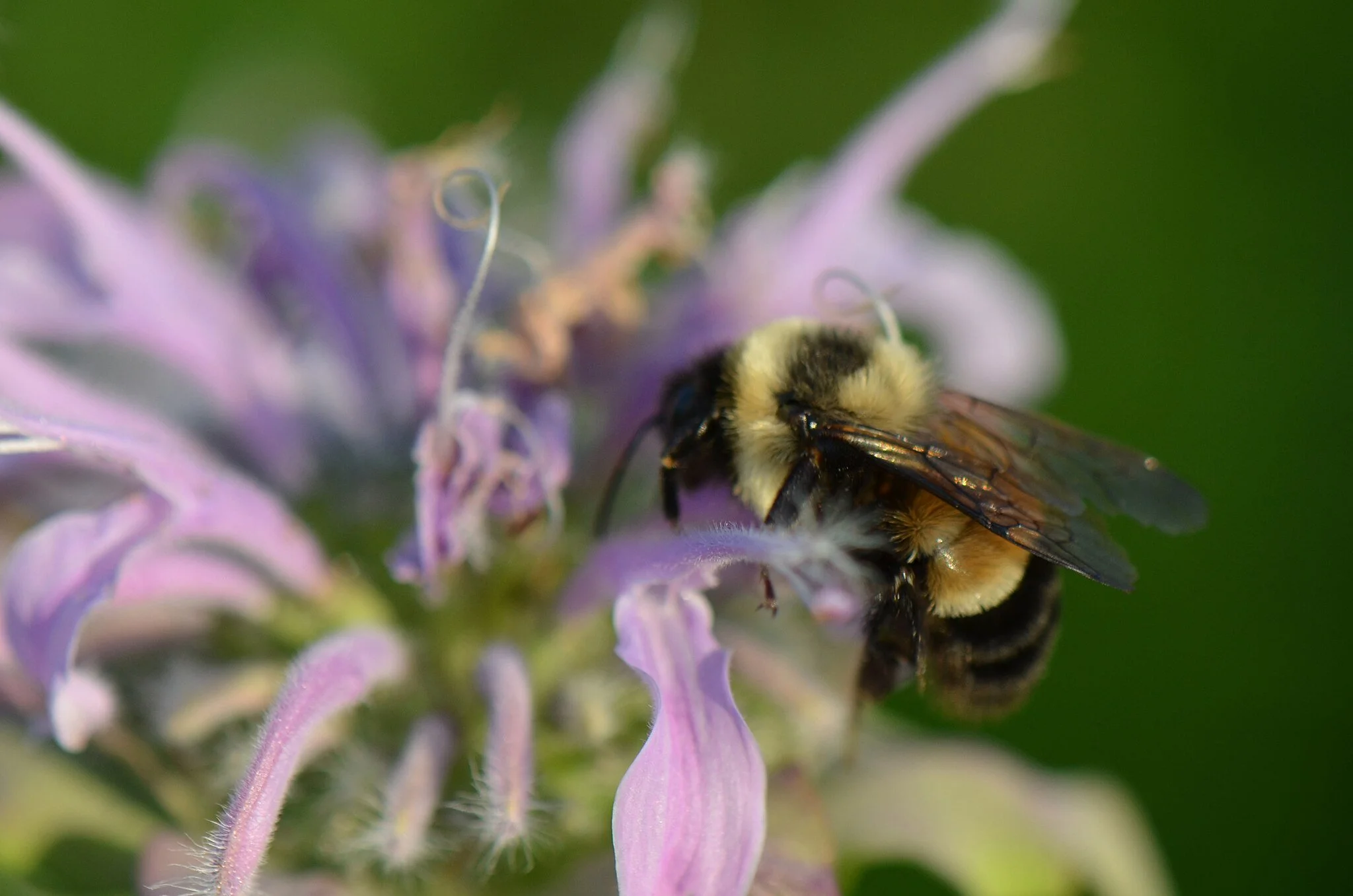
Endangered species: Rusty patched bumblebee
The rusty patched bumble bee (Bombus affinis) is a medium-sized bumble bee with a mostly yellow thorax and a distinctive rusty or brown patch on the second abdominal segment of workers and males, while queens are larger and mostly yellow on the first two segments. It’s fuzzy, with a stocky body typical of bumble bees, and is a social species living in colonies with one queen and many workers..
Where do they live (specifically in Michigan)?
Historically the rusty patched bumble bee occurred across eastern and midwestern states including lower Michigan, in prairies, grasslands, woodlands, marsh edges, agricultural landscapes and gardens that support diverse flowers and nesting habitat. In Michigan, this bumblebee is now extremely rare or possibly no longer present in counties like Allegan, Alpena and Alcona, reflecting a fragmented and sparse occurrence..
What do they pollinate?
Rusty patched bumble bees are excellent generalist pollinators that forage on a wide variety of flowers and contribute to pollination of many crops. They perform buzz pollination, helping release pollen from plants like cranberries, apples, plums, alfalfa, onion seed and other blossoms, and may also assist with tomatoes, peppers and other buzz-pollinated crops.
How do their numbers look nationally and in Michigan?
Once widespread in 28+ states and parts of Canada, the rusty patched bumble bee has declined drastically; populations have dropped by roughly 87–95% since the early 2000s, and the species now persists in a tiny fraction of its historic range with isolated populations in a few states and possibly none confirmed recently in Michigan. It’s federally listed as endangered..
How did they become a threatened species?
The dramatic decline of the rusty patched bumble bee stems from multiple interacting threats including habitat loss and fragmentation from agricultural and urban development, widespread pesticide exposure, diseases and pathogens, and climate change altering floral resources and nesting conditions, reducing survival and reproduction..
What can we plant to encourage their numbers?
In support of rusty patched bumble bees, plant a continuous succession of native, pollen- and nectar-rich flowers that bloom from spring through fall (e.g., wildflower mixes, native asters, monarda, clovers, goldenrods, milkweeds, blueberries), provide undisturbed nesting habitat with diverse ground cover and avoid pesticides. Protecting and restoring grasslands and prairie edges with diverse floral resources helps sustain colonies..